Key takeaways
- In a microgrid-as-a-service contract the provider designs, finances, builds and operates the microgrid, and the customer pays over the contract term for the energy and resilience it delivers instead of buying the assets.
- Zero-CAPEX microgrid models work when the provider controls the full delivery chain of design, financing, construction and operation, or brings in a partner for the part it cannot carry, usually the capital.
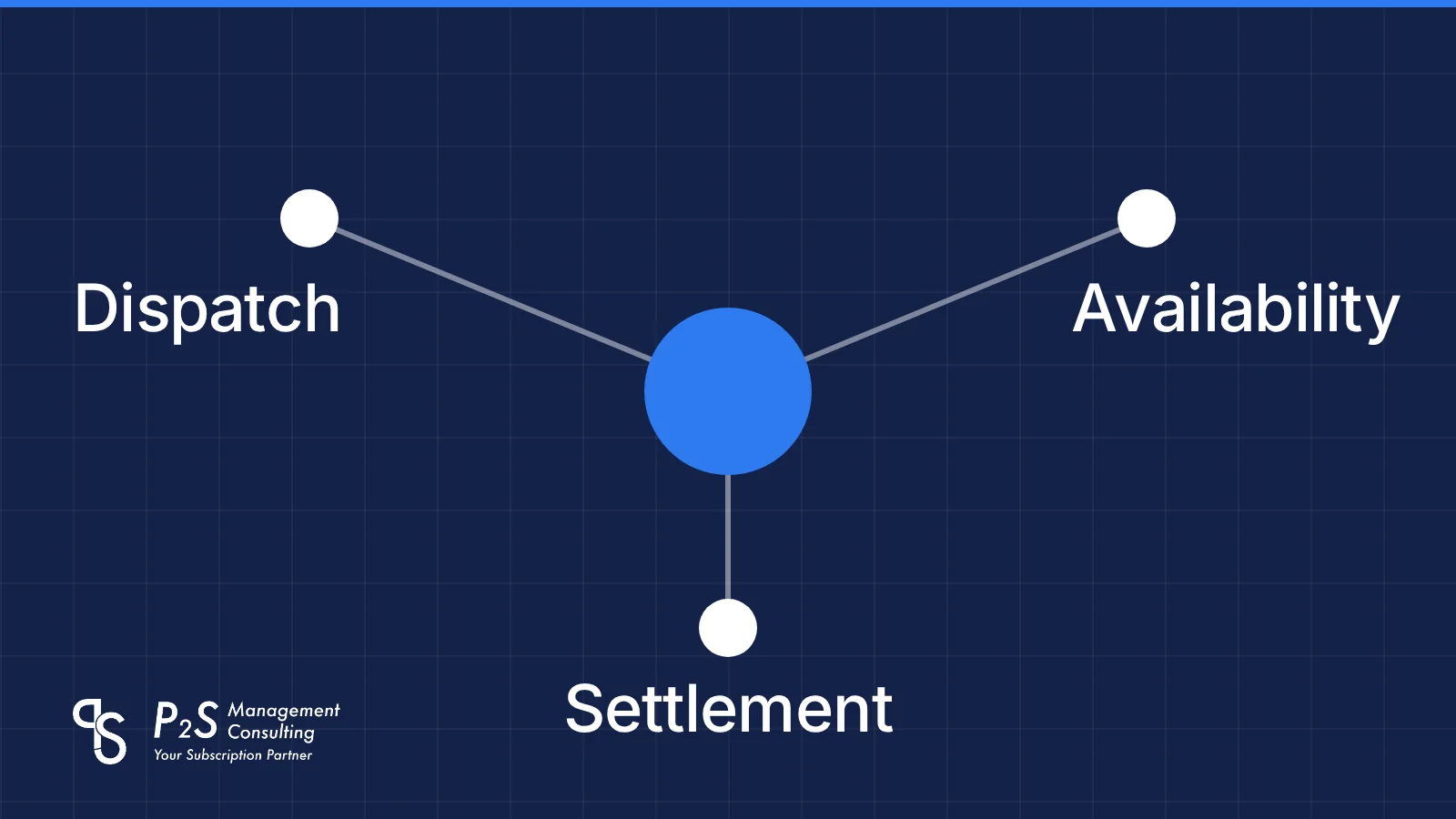
- Clean dispatch rights, verifiable availability windows and settlement rules need to be agreed before signing, not at the billing stage.
In our experience, transit depots, campuses and industrial sites often ask microgrid companies and the integrators that build their energy systems for the same thing: deliver the microgrid, but do not send us a capital invoice. For an integrator or an equipment maker, that request is a business-model decision, not a payment option. Offering microgrid as a service means owning a site's energy system for decades, financing it, operating it and being paid as it performs.
This guide is written for the provider. The decision it helps with is whether to offer a microgrid as a service, which parts of the delivery chain you need to control yourself, which you can hand to a partner, and which terms you settle before the customer signs. It draws on our whitepaper Beyond the Meter, based on P2S research across more than 500 industrial As-a-Service cases, and on one public case in detail.
What microgrid-as-a-service means
Definition. Microgrid-as-a-service (MaaS) is a contract in which a provider designs, finances, builds, owns and operates a microgrid at the customer's site, and the customer pays over a long term for the energy, resilience and infrastructure the microgrid delivers, instead of buying the system.
Providers also market it as energy as a service for microgrids, and the categories overlap. The US Federal Highway Administration describes the energy services agreement in the case below as structured similarly to a traditional power purchase agreement. What separates it from a plain PPA is what else the customer buys: use of the underlying infrastructure and an assurance that the system keeps working when the utility does not. A PPA sells delivered electricity. A microgrid service sells a resilience outcome as well, and in our experience that is where most of the provider's risk sits.
The case: a bus depot that bought power and resilience, not a microgrid
The customer problem. Montgomery County, Maryland, is moving its Ride On bus fleet from diesel to electric. At its Brookville depot it needed charging for up to 70 electric buses, bus service that keeps running through utility outages, and no upfront capital spend.
The commitment. The county signed a 25-year Energy Services Agreement with AlphaStruxure, with financial close on 9 September 2021, according to the FHWA project profile. AlphaStruxure designed, built and financed the system and owns and operates it. The county buys the electricity and resilience on an ongoing basis. In the FHWA's words, the provider fronted the capital and the county is expected to pay it back monthly over 25 years, alongside its power bill. The county also received a 300,000 USD Maryland Energy Administration grant towards the solar canopies.
The design decisions. Four choices made the promise deliverable:
- One integrated system. Solar canopies, battery storage, on-site generation, microgrid controls and bus chargers were delivered as one integrated solution, which, in our reading, leaves one party answerable for whether the buses charge.
- Capital inside the provider. AlphaStruxure is a joint venture of Schneider Electric and the Carlyle Global Infrastructure Opportunity Fund. The technology partner brings the delivery capability and the fund brings long-term capital.
- Central operation. The FHWA profile describes 24/7 operation, monitoring and optimisation from a cloud-connected network operations centre.
- Resilience written into the service. The agreement includes assurances that the hardware keeps charging the fleet even during long utility outages.
The result. The county opened the depot in October 2022. Its release describes a 6.5 MW microgrid with more than 4.14 MW of charging capacity, and says the county expects to avoid utility demand charges and will not have to schedule bus charging around time-of-use rates. The release reported 14 electric buses at the time, with the full 70 planned by 2026. So the 25-year term is a signed commitment, the built system is an observed result, and the fleet size and tariff benefits are expectations. Contract length is not proof of the provider's margin.
Three ways to deliver a microgrid
Building a microgrid is the same engineering job under each of these contracts. What changes is who funds it, who carries performance risk and what the invoice pays for.
| Customer buys the microgrid | Third-party ownership with a PPA | Microgrid-as-a-service | |
|---|---|---|---|
| Who funds and owns the assets | The customer | A developer or its investors | The provider or its financing partner |
| Who operates and maintains | The customer, or a contractor under an O&M agreement | The developer | The provider |
| What the customer pays for | The project, then O&M fees | Electricity delivered, at an agreed rate per unit | Energy, infrastructure use and resilience, under a long-term service fee structure |
| Who carries performance and outage risk | Mostly the customer, within warranty terms | The developer, for generation output | The provider, for the outcomes written into the agreement |
| What has to be agreed upfront | Specification and acceptance tests | Price, term and output measurement | Dispatch rights, availability windows and settlement rules |
In a PPA the developer owns, operates and maintains the system and the host customer buys its electric output for an agreed period, as the US EPA describes solar PPAs. Brookville shows that the boundary between the last two columns is not sharp. The useful test is the remedy: if the system is down during an outage, does the customer simply buy fewer kilowatt-hours, or does the provider owe it something?
For savings and infrastructure outcomes, which include microgrids, our whitepaper lists these value metrics: shared savings against a verified baseline, a charge per kWh delivered, guaranteed resilience windows and avoided network investment. Its recommended price structure has three parts: a fixed availability fee, a fixed maintenance fee and a variable charge on verified consumption. Pick one primary metric and treat the other charges as secondary to it.
Three terms to agree before signing
Our whitepaper sets dispatch rights, verifiable availability windows and settlement rules as prerequisites for availability contracts, agreed before signing. A microgrid's resilience promise is an availability promise, so the same three terms apply. Each one tests whether you control the outcome, not just whether you can measure it.

Dispatch rights. Who decides when the battery charges, discharges or exports, and in what order of priority? A depot microgrid has competing uses for the same stored energy: a reserve for outages, peak shaving on the depot's bill and, where allowed, grid services. If the customer's operations team can override dispatch, or a utility programme can call on the battery, the contract has to say which use wins and who absorbs the cost when another loses.
Verifiable availability windows. When does the system have to deliver, and how is that proven? "Resilient" is not a measurable term. Define the windows, such as the overnight charging window for a bus fleet, the reserve to hold in them and the telemetry both parties accept as evidence. Control matters here too: if the customer adds buses or changes timetables, the load moves outside what you designed for, so the contract needs a trigger to resize or reprice.
Settlement rules. How each charge is calculated, from which meter, and what is excluded. Spell out how outages caused by the utility or by the customer's own equipment are treated, who keeps export revenues and incentives, and what happens to the price when tariffs or regulations change. If these rules are left for the first invoice, each invoice risks becoming a negotiation. Our guide to outcome-based contracting and SLAs covers how to draft the boundaries.
What the provider has to carry
A zero-CAPEX offer moves the capital spend from the customer's books to yours or your partner's. Revenue arrives monthly for decades, while design, equipment and construction costs arrive in the first year. That cash-flow shape, known as the Fish Model, makes microgrid financing a design problem, not a reason to avoid the model; our article on the Fish Model explains it.
The whitepaper's principle is that capital structure follows contract structure. A long-term service contract financed like a short equipment sale strains the balance sheet that has to carry it. Brookville's answer was to put long-term infrastructure capital inside the provider through the joint venture. Our page on financing and cash-flow structuring sets out the options from self-funded pilots to structured debt.
When to narrow the promise
A first project does not need the full zero-CAPEX package. Narrow the offer when:
- You cannot control dispatch. If the customer insists on running the system, offer availability of the assets within defined conditions rather than a resilience outcome.
- You cannot carry the capital for the full term. Partner with an infrastructure investor or a financing partner that owns the assets, and keep design, operation and the performance commitment.
- The site cannot physically deliver the promise. A contract cannot create capacity the site does not have. If on-site generation and storage cannot cover the critical load for the outage window the customer wants, size the system for it or shorten the window, rather than writing a guarantee you cannot meet.
- The customer cannot define the outcome. If nobody can say what an hour of outage costs, a resilience fee will not survive procurement. Start with a smaller scope, such as storage and controls, and build the data first.
Our guide to energy storage as a service covers how to choose which outcome to guarantee, and our article on the ESCO model vs energy-as-a-service explains why a share of calculated savings is a weaker billing unit than metered output.
Frequently asked questions
Who owns the microgrid in a microgrid-as-a-service contract?
The provider, or its financing partner, usually owns the assets and carries residual value risk, while the customer contracts the outcome. In Brookville, AlphaStruxure built the system and owns and operates it, and the county buys electricity and resilience. Ownership can also sit in a dedicated vehicle, so check who is responsible for performance, not only whose name is on the title.
How long are microgrid-as-a-service contracts?
Long enough for the service fees to repay the assets. Brookville's agreement runs for 25 years. Shorter terms are possible, but they raise the monthly fee or leave the provider with more residual value risk at the end, so the term is usually set alongside the financing.
What happens at the end of a microgrid-as-a-service contract?
The contract should say before signing: extension at a new fee, transfer of the assets to the customer at an agreed value, or removal by the provider. Agree how equipment replaced during the term, such as battery modules, is treated, because it changes the value of what is left.
Decide what you will control before you price it
A microgrid-as-a-service offer is a long operating commitment, 25 years in Brookville's case, with a monthly invoice attached. Before quoting, you should be able to say who owns each part of the delivery chain, who decides dispatch, which windows you will guarantee and how each charge is settled. If you can, price it. If you cannot, narrow the scope or bring in the partner that fills the gap.
Beyond the Meter: how Energy Storage & Utilities win with outcome-based service models. The whitepaper adds the contract patterns for availability, savings and performance guarantees, the financing paths from first project to scale, the six operating dimensions to design before the first contract, and six practitioner cases. Download the whitepaper or book a conversation with a partner.
Related reading
- Energy Storage as a Service: which outcome can you profitably guarantee?
- The ESCO model vs energy-as-a-service: why shared savings so often ends in disputes
- Risk allocation and guarantees
- Value metrics and metering
- Energy Storage & Utilities at P2S
Sources: FHWA Center for Innovative Finance Support, Project Profile: Montgomery Microgrid Charging Depot P3, Maryland; Montgomery County, Montgomery County Completes Nation's Largest Bus Microgrid and Charging Infrastructure Project (31 October 2022); AlphaStruxure, Brookville Smart Energy Bus Depot; US EPA, Green Power Markets: Financing; P2S Management Consulting, Beyond the Meter (2026).
