Key takeaways
- Energy storage as a service (ESaaS) means the customer pays for a storage outcome, such as usable capacity, a lower bill or guaranteed backup power, while the provider keeps responsibility for delivering it.
- The hard choice is not how often you invoice. It is which outcome you can guarantee, control, verify and fund for the life of the contract.
- Before committing, test four things: what the customer needs guaranteed, how much of the operation you control, how delivery and payment are verified, and whether price and funding cover the obligations.
Battery manufacturers and integrators keep hearing the same instruction from their boards: build a service offer. Very few are told which one.
The difficult part is not moving from a one-off invoice to a monthly one. It is deciding what you promise. In energy storage as a service, also called battery storage as a service, the customer pays for an outcome instead of buying the battery. The provider, or its financing partner, keeps the asset and the responsibility for the result. That promise decides who carries degradation, dispatch and downtime risk for years.
This guide is written for the provider: the CEO, commercial director or service leader deciding which promise to make. It draws on our whitepaper Beyond the Meter, which is based on P2S research across more than 500 industrial As-a-Service cases in 12 industries.
A ten-year promise changes the business
In one P2S case, a European provider of mission-critical power systems was asked by a financial services campus for uninterruptible backup power and peak-load support. The campus did not want to buy and run a battery system. It wanted one party accountable for power being available when the grid was not.
The provider signed a ten-year contract with a 99.8% availability guarantee. A promise like that is closer to insurance than to a maintenance contract, so three design decisions came before the price:
- Explicit exclusions. Third-party grid events outside the provider's control were defined before signing, so its liability covered failures within its own operating scope, not every disturbance on the network.
- A shared source of truth. Telemetry that both parties could read independently was written into the contract as the basis for measuring availability and settling any shortfall.
- A priced risk premium. The fee carried an explicit premium for the downside liability instead of hiding that risk inside a service rate.
What the case documents is a signed commitment and its design, not ten years of measured performance. Its lesson is about sequence. The provider settled what it could control and verify before it settled what to charge. A provider that reverses that order risks pricing a maintenance contract while accepting insurance-level liability.
Three customer priorities to design around
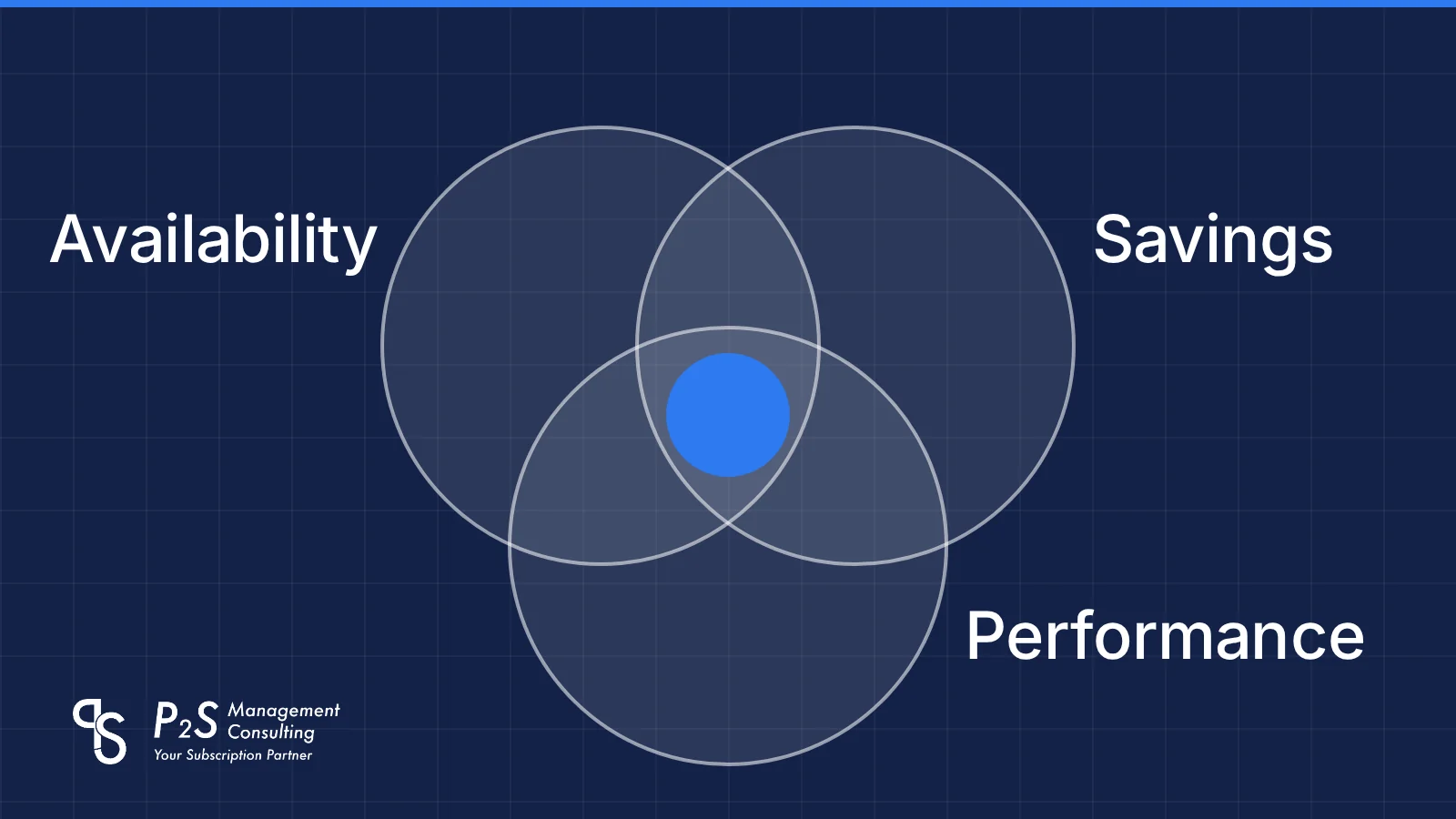
Our whitepaper groups storage service offers into three commercial patterns. They overlap: some availability commitment sits inside almost every offer, and a performance guarantee usually includes one. What separates them is the dominant customer promise, and that promise changes the payment basis, your operating responsibilities and the risk you keep.
| Availability | Savings and infrastructure outcomes | Performance guarantee | |
|---|---|---|---|
| Customer need | Usable capacity or uptime without owning the battery | A lower energy bill, resilience or avoided network investment without the capital project | Protection against downtime with immediate economic consequences |
| Payment basis | Fixed fee per battery, per usable kWh or per kW of contracted capacity | Fixed fees plus a charge on verified consumption, or a share of savings against an agreed baseline | Service fee that includes a priced risk premium, with remedies such as liquidated damages for shortfalls |
| Provider's operating responsibilities | Maintenance, monitoring and degradation within defined usage conditions | Design, optimisation and dispatch, often with financing and build | Performance to defined thresholds, such as availability by service window or restoration time, with the field response to match |
| How delivery is verified | State-of-health and availability telemetry | An agreed baseline or metered output, plus dispatch and settlement rules | Independently verifiable telemetry and agreed causality rules |
| Principal provider risk | Degradation and usage priced at best case | Results that depend on tariffs, customer behaviour or disputed projections | Insurance-like liability priced as a maintenance contract |
When you write the offer, keep three things apart. The customer promise is the result the customer needs. The payment mechanism is what determines the invoice. The performance commitment is what you must deliver, under which conditions, and what happens if you fall short. A monthly fee is a payment mechanism. A 99.8% availability threshold is a performance commitment. A remedy is what follows a miss.
Payment mechanisms can be combined. The whitepaper's own model for savings and infrastructure outcomes uses a fixed availability fee, a fixed maintenance fee and a variable charge on verified consumption. Where an offer combines capacity access, consumption charges or savings-linked payments, specify what each charge covers, which operating rights apply, and how performance and payment are calculated. Unclear boundaries create disputes. Where part of the payment is a share of savings, our guide to the ESCO model vs energy-as-a-service explains when that structure still works.
Four tests before committing
Each test has a commercial consequence. If an offer fails one, change the promise before you change the price.

- What does the customer need us to guarantee? Start from the failure the customer wants to avoid. A bus depot facing a long grid connection needs capacity on site. A hospital needs power restored within a defined time. A factory with high demand charges needs a lower bill. If the customer cannot say what failure costs them, they will not pay a premium for avoiding it.
- Do we control enough of the operating conditions to deliver it? Measuring an outcome is not the same as controlling it. List what drives the result: who decides dispatch, how the customer uses the site, which third parties such as the grid operator, an aggregator or a maintenance contractor can affect performance, and what happens when the tariff or the load changes. A provider promising demand-charge savings while the customer sets the production schedule is guaranteeing someone else's behaviour. Whatever you do not control becomes an exclusion, a shared responsibility or a repricing trigger, or it stays out of the promise.
- Can both parties verify delivery and calculate payment? Agree the data source, the calculation and the dispute process before signing. Battery-as-a-service practitioners in material handling told us they moved from variable kWh billing to a fixed monthly energy package with defined usage parameters, because customers valued predictable invoices and billing disputes fell. If the invoice depends on a model nobody can audit, expect to negotiate it every month. Our guide to value metrics and metering goes deeper.
- Can the price and funding support the obligations for the whole contract? A service contract turns a one-off sale into years of obligations: maintenance, field response, augmentation if contracted capacity must be held, and the cost of capital tied up in the asset. Model those costs at expected field conditions, not datasheet conditions, and compare them with the cash the contract brings in each year. Funding does not need to mirror the contract term exactly, but inflows have to cover debt service and lifecycle costs as they fall due. A larger contract value is not proof of a better margin. See financing and cash-flow structuring.
When to narrow the promise
Not every provider should start with the most ambitious guarantee. Consider reducing the scope, adding a delivery partner or postponing the offer when you cannot:
- control the operating conditions essential to performance;
- agree a baseline or measurement method with the customer;
- assign responsibility for customer or third-party actions;
- substantiate lifecycle costs and the funding they need.
Narrowing is a commercial decision, not a retreat. An availability offer with clear usage conditions can build the data, track record and lender relationships that a performance guarantee later needs. A partner can supply the field service or financing you lack. UgoWork, for example, runs a pay-per-use energy model for forklift fleets and funds the batteries through a dedicated financial partner. Postponing is the right answer when the only way to win the deal is to accept a risk you cannot price. Our guide to risk allocation and guarantees covers exclusions and remedy caps in more detail.
Frequently asked questions
Who owns the battery in an energy storage as a service contract?
Usually the provider, its financing partner or a dedicated investment vehicle, not the customer. Title matters less than responsibility: the contract should state who carries degradation, maintenance and residual-value risk, and under which usage conditions.
Is energy storage as a service just a lease?
Not necessarily. A lease mainly changes how the customer pays for an asset, and depending on its terms, performance risk can stay with the customer. In an energy storage service the provider commits to an outcome and is accountable, through the agreed remedies, when it falls short. Check which performance responsibility actually moves to the provider.
Is energy storage as a service more profitable than selling the battery?
Not automatically. A service contract usually brings in more revenue over its life than a one-off sale, but the provider also keeps the asset, the service obligations and the cost of capital. Whether that produces a better margin depends on pricing those obligations at field conditions and funding them on terms the contract cash flows can carry.
Design the promise and the delivery model together
The providers that make storage services work did not start from a contract template or a pricing grid. They chose a promise the customer valued, checked that they could control, verify and fund it, and then wrote the contract around it. If your board has asked for a service offer, you should now be able to name the promise worth investigating, the assumptions to test with a first customer, and the responsibilities to settle before you commit.
Beyond the Meter: how Energy Storage & Utilities win with outcome-based service models. The whitepaper adds what this guide leaves out: the operating architecture behind each pattern, the decisions a CEO cannot delegate, six practitioner cases and the financing options from first project to scale. Download the whitepaper or book a conversation with a partner.
Related reading
- The ESCO model vs energy-as-a-service: why shared savings so often ends in disputes
- Outcome-based contracting and SLAs
- Servitization for industrial OEMs
- Energy-as-a-Service in action: UgoWork's model for trust, uptime and flexibility
- Energy Storage & Utilities at P2S
Source: P2S Management Consulting, Beyond the Meter (2026), based on industrial As-a-Service cases, structured practitioner interviews and public market sources. Practitioner cases are anonymised except where publicly disclosed.
